

Home Office announces new law governing police use of facial recognition
Published: 04/11/2026
| UK Government
On Wednesday, 4 November 2026, the Home Office announced new statutory controls governing the use of facial recognition and biometric technologies, following a consultation launched in December 2025 that received 13,845 submissions. The government has also released the consultation outcome, including its official response.
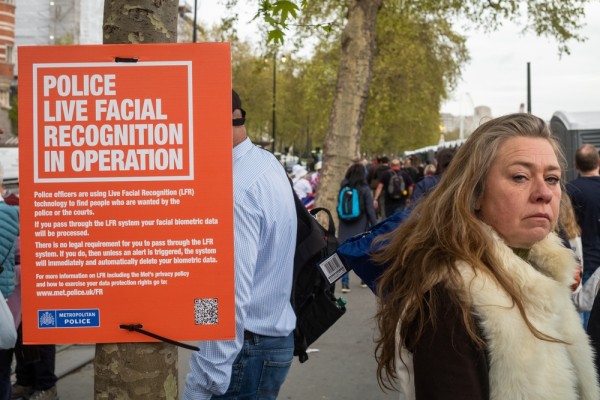
Under the proposals, which build on the Protection of Freedoms Act 2012, specific primary legislation will replace the current patchwork regulatory system to establish clear legal powers and operational duties for capturing, retaining, and deploying biometric data. The law will require intelligence-led, proportionate police deployments, restricting use to areas where officers have specific grounds to suspect wanted individuals are present. Law enforcement will also subject technologies to rigorous, independent testing to guard against bias or discrimination by age, gender, or race.
A dedicated independent watchdog will be established to oversee current and future biometric systems, scrutinise operational standards, and advise ministers on emerging risks. In cases of persistent non-compliance, the regulator will have powers to seek court injunctions barring police forces from operating the technologies. The government will also formulate two statutory codes of practice in collaboration with the regulator: one setting binding operational standards for police forces, and a second directing commercial organisations, including retailers, to deploy systems responsibly alongside public policing.
Ministers highlighted the operational efficacy of the technology, noting its role in the national mission to halve violence against women and girls over ten years. A six-month pilot of static live facial recognition (LFR) cameras in Croydon resulted in 173 arrests for severe offences, including rape, kidnap, and sexual assault, alongside a 10.5% overall crime reduction and a 21% decrease in violence against women and girls. Deployments at Notting Hill Carnival also led to the interception of 86 registered sex offenders and seven arrests for order breaches.
The legislative measures are accompanied by an £11 million government investment to triple the fleet of mobile LFR vans across England and Wales. The Home Office confirmed that algorithms used in these vehicles have undergone independent testing, with an additional verified algorithm for retrospective facial recognition scheduled for police deployment from next year. While acknowledging that the use of biometric surveillance technologies has a direct impact on the rights to privacy, freedom of expression, and assembly, the government maintained the new regime balances civil liberties with community safety.
In a statement responding to the announcement, Jasleen Chaggar, Senior Advocacy Officer at Big Brother Watch, said: "Actions speak louder than words, and the government’s support for expanding mass surveillance software is clear. Rather than preserving the public’s protections against police intrusion, the Home Office’s response to this damning public consultation shows they only plan to undercut them.
"We cannot accept the government’s glacial pace, as more innocent people are falsely accused of crimes they did not commit and our freedom to live without constantly identifying ourselves to the state is already being eroded. The government admits that this technology is in need of 'tough new safeguards.' They must halt the expansion of its use until those safeguards are in place."
Additional reporting in The Guardian and BBC News.
Training Announcement: The IAPP Certified Information Privacy Technologist (CIPT) is a privacy-focused IT professional certification from the IAPP that addresses data protection requirements and controls in complex technical environments. It explores the data lifecycle, privacy risk models and frameworks, the principles of Privacy by Design, and the role of privacy-enhancing technologies within the organisation. Find out more.

Privacy Engineering Training

EU GDPR TRAINING
Privacy Engineering Training
EU GDPR TRAINING
What is this page?
You are reading a summary article on the Privacy Newsfeed, a free resource for DPOs and other professionals with privacy or data protection responsibilities helping them stay informed of industry news all in one place. The information here is a brief snippet relating to a single piece of original content or several articles about a common topic or thread. The main contributor is listed in the top left-hand corner, just beneath the article title.
The Privacy Newsfeed monitors over 300 global publications, of which more than 3,250 summary articles have been posted to the online archive dating back to the beginning of 2020. A weekly roundup is available by email every Friday.