

Police use of facial recognition to be expanded in crime crackdown
Published: 04/12/2025
| UK Government
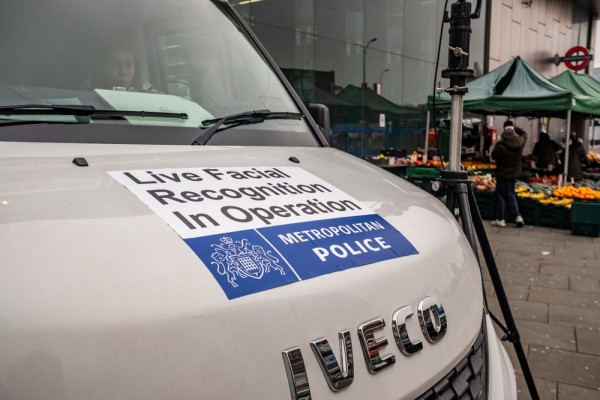
The Home Office has launched a consultation seeking views on how the use of facial recognition by police can be regulated to protect people's privacy while enabling such technologies to be scaled nationally. The government plans to expand facial recognition use to help forces tackle crime and secure more convictions. Sarah Jones, Minister for Policing and Crime Prevention, described facial recognition as the "biggest breakthrough for catching criminals since DNA matching," noting that it has already helped catch thousands of offenders.
The consultation will form the basis of new laws expected in two years and seeks views on the necessary safeguards, proportionality and what powers a new regulator should have to oversee the police use of facial recognition, biometrics, and other tools.
It also seeks views on whether police should be permitted to compare photos of crime suspects, sourced from CCTV, doorbell, and dashcam footage, against facial images held on government databases, including the passports of 45 million Britons and immigration records.
Currently, police forces employ three types of facial recognition technology: retrospective, live, and operator-initiated (via a mobile app). The Home Office spent £12.6 million on the technology last year, with £2.8 million allocated to national live facial recognition, including fixed location pilots and mobile vans. This year, £6.6 million was spent on evaluation and adoption, including £3.9 million on creating a national facial-matching service, currently in testing, which is expected to hold millions of custody images for retrospective searching.
The consultation closes on 12 February 2026.
In a statement responding to the news, Biometrics and Surveillance Camera Commissioner Professor William Webster, said: "This is a unique and important opportunity to shape this fast moving policy area, and I urge everyone with an interest in how facial recognition and similar technologies are being used by law enforcement agencies to actively contribute to the debate and reply to the consultation.
"As I consider my response as Commissioner, my priorities will be to consider, firstly, what meaningful oversight on the use of facial recognition and similar technologies actually looks like. Secondly, how we can ensure that the regulatory framework is sufficiently agile to provide the public with confidence that the right balance of regulatory oversight has been achieved in a fast moving area with innovation and new technologies emerging at pace."
Meanwhile, a statement by Silkie Carlo, director of Big Brother Watch, read: "Police have been using facial recognition technology absent a democratic or legal basis for a decade, making this consultation necessary but long overdue. If the government intends to take the public's views in this consultation seriously, they should immediately stop the police's widespread use of facial recognition surveillance pending the outcome but instead they have just funded a major expansion of these cameras across our towns and cities.
"Laws in Europe protect the public against facial recognition mass surveillance, but Britain is an outlier in the democratic world with the public now watched by these cameras and treated like suspects on an almost daily basis."
Additional reporting by BBC News, the Independent, and The Telegraph (£).
£ - This article requires a subscription.
Training Announcement: The IAPP Certified Information Privacy Technologist (CIPT) is a privacy-focused professional IT certificate from the IAPP that addresses data protection requirements and controls within complex technological environments. It explores the data lifecycle, privacy risk models and frameworks, the principles of Privacy by Design, and the role of privacy-enhancing technologies within the organisation. Find out more.
What is this page?
You are reading a summary article on the Privacy Newsfeed, a free resource for DPOs and other professionals with privacy or data protection responsibilities helping them stay informed of industry news all in one place. The information here is a brief snippet relating to a single piece of original content or several articles about a common topic or thread. The main contributor is listed in the top left-hand corner, just beneath the article title.
The Privacy Newsfeed monitors over 300 global publications, of which more than 3,250 summary articles have been posted to the online archive dating back to the beginning of 2020. A weekly roundup is available by email every Friday.