

Report finds risk of bias in police investigations using retrospective facial recognition
Published: 12/11/2026
| The Guardian
An official report warns that police officers risk arresting innocent people, particularly from ethnic minorities, if they treat inaccurate facial recognition results as definitive evidence rather than intelligence.
Published on Wednesday by His Majesty's Inspectorate of Constabulary and Fire & Rescue Services (HMICFRS), the review examined retrospective facial recognition (RFR), which compares still images against databases after an offence, rather than scanning crowds in real time. While acknowledging the technology's value in fighting crime, inspectors found it remains beset by algorithmic bias, making it more likely to falsely flag people from ethnic minorities as suspects.
The audit revealed that some investigators failed to conduct sufficient enquiries before taking enforcement action, leading to inappropriate investigative steps in a small number of cases. Accuracy was further compromised by officers uploading poor-quality or unsuitable imagery, including blurred pictures and photos containing multiple faces. Furthermore, inspectors warned that public confidence risks being undermined because police forces retained custody images that should have been deleted.
The inspectorate added that current legislation has failed to keep pace with technological advances, leaving forces without a comprehensive statutory framework to clarify lawful grounds for RFR deployment and necessary public safeguards.
In conclusion, HMICFRS Kathryn Stone warned that maintaining public trust requires forces to prove that appropriate safeguards are operating, bias and data retention risks are managed, and decisions remain subject to human judgment. Stone added that a clearer statutory framework, stronger national standards, and improved governance and oversight are essential.
In a statement responding to the news, Jasleen Chaggar, Senior Legal & Policy Officer for Big Brother Watch, said: "The revelations that officers are treating facial recognition as bona fide evidence rather than a probability score is alarming.
"The government must urgently step in and introduce strong safeguards through its much-promised legal framework, instead of handing the police a blank cheque to operate this technology without any democratic oversight."
Training announcement: Freevacy provides comprehensive training for new and existing practitioners on the changes introduced by the DUA Act to the UK General Data Protection Regulation (GDPR), the Data Protection Act 2018 (DPA18), and the Privacy and Electronic Communications Regulations 2003 (PEC-Regulations). Our courses are always up to date and provide a forum for learning and discussing how to ensure your data protection processes remain compliant. Find out more.

GDPR TRAINING

EU GDPR TRAINING

Privacy Engineering Training

EU GDPR Training
US Privacy Law Training

UK GDPR Training
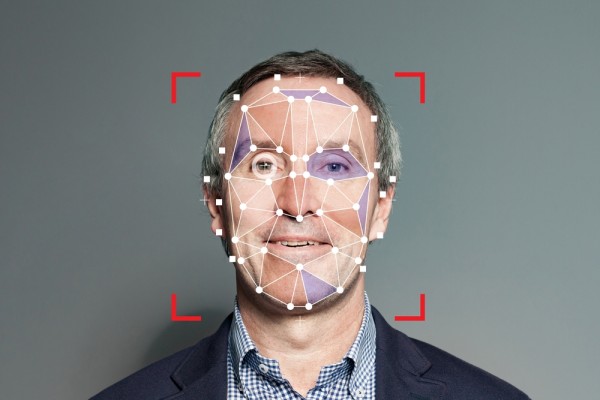
Image credit: Artmim
GDPR TRAINING
EU GDPR TRAINING
Privacy Engineering Training
EU GDPR Training

US Privacy Law Training
What is this page?
You are reading a summary article on the Privacy Newsfeed, a free resource for DPOs and other professionals with privacy or data protection responsibilities helping them stay informed of industry news all in one place. The information here is a brief snippet relating to a single piece of original content or several articles about a common topic or thread. The main contributor is listed in the top left-hand corner, just beneath the article title.
The Privacy Newsfeed monitors over 300 global publications, of which more than 3,250 summary articles have been posted to the online archive dating back to the beginning of 2020. A weekly roundup is available by email every Friday.