

Rapid AI adoption is not enough to deliver transformation
Published: 13/10/2026
| The Guardian
Companies are facing significant operational fallout from the rushed deployment of artificial intelligence (AI) tools, as low-quality outputs, technical mistakes, and security risks increasingly eat into staff time and inflate costs. Instead of securing quick productivity wins, businesses are finding that employees spend more and more of their working hours correcting errors generated by automated systems.
Major technology companies and large enterprises are now adjusting their strategies in response to these setbacks. Meta has scaled back plans to replace staff with AI agents and has begun expanding its managerial ranks again after staff spent increasing amounts of time rectifying security and technical errors. At Microsoft, leadership highlighted the emergence of low-grade material in daily workflows, with Chief Strategy and Transformation Officer Kathleen Hogan acknowledging that deployment does not equal AI transformation.
Research highlights a growing disconnect between heavy technology investment and its actual performance in the workplace. An Atlanta Federal Reserve working paper found that 90% of executives report their AI investments have yet to deliver tangible productivity gains. Meanwhile, an Ernst & Young survey revealed that 36% of senior AI leaders at firms generating at least $1 billion in annual revenue experienced an AI incident that led to data loss, reputational damage, financial loss, or operational disruption.
Data governance and rising costs have prompted corporations, including McKinsey, Palantir, Booz Allen Hamilton, and Nvidia, to curb internal AI use or restrict tools over corporate security concerns. Analysts and academics also observe that AI models routinely generate plausible-sounding errors that evade immediate detection, allowing flaws to propagate across broader workflows.
An Indeed survey also points to a major training gap. More than half of employees left feeling inadequately trained, while most managers highlight they are outmatched by staff and ill-equipped to direct AI-proficient employees.
The Society for Human Resource Management (SHRM) advocates shifting from general rollouts to role-specific training, mentorship pairings, and more deliberate implementation schedules.
Training Announcement: Freevacy offers a range of independently recognised professional AI governance qualifications and AI Literacy short courses that enable specialist teams to implement robust oversight, benchmark AI governance maturity, and establish a responsible-by-design approach across the entire AI lifecycle. Find out more.

Privacy Engineering Training

EU GDPR TRAINING
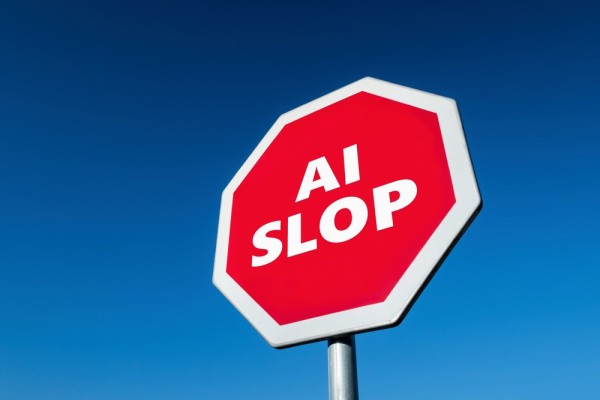
Image credit Mino Surkala on Shutterstock.
Privacy Engineering Training
EU GDPR TRAINING
What is this page?
You are reading a summary article on the Privacy Newsfeed, a free resource for DPOs and other professionals with privacy or data protection responsibilities helping them stay informed of industry news all in one place. The information here is a brief snippet relating to a single piece of original content or several articles about a common topic or thread. The main contributor is listed in the top left-hand corner, just beneath the article title.
The Privacy Newsfeed monitors over 300 global publications, of which more than 3,250 summary articles have been posted to the online archive dating back to the beginning of 2020. A weekly roundup is available by email every Friday.