

Has Google lobbied cookie banner reform off the table?
Published: 23/06/2026
| NOYB
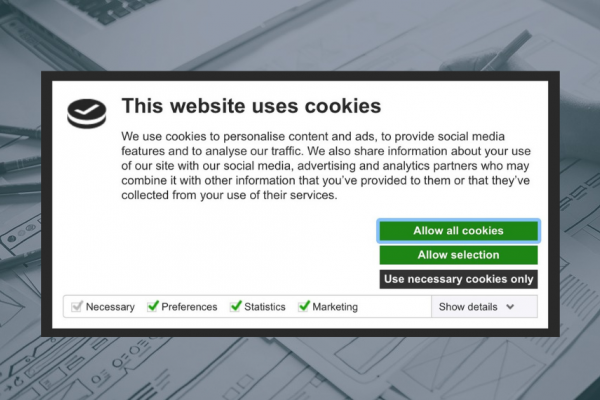
A blog article by the Austrian privacy and digital rights advocacy group NOYB examines the ongoing frustration with cookie banners, which serve as symbols of perceived excessive EU regulation. Although only an estimated 3 to 10% of users genuinely wish to be tracked online, the tracking industry uses deceptive design features, known as dark patterns, to manipulate choices and achieve consent rates of up to 90%. This process generates billions of wasteful clicks for 450 million EU consumers annually while securing vast profits for technology companies.
In an attempt to resolve this, the European Commission proposed the Digital Omnibus framework in autumn 2025. This included Article 88b of the EU General Data Protection Regulation (GDPR), a new provision that seeks to abolish cookie banners and replace them with an automated signal that communicates user preferences from their devices. Unlike similar systems in California, the EU model was designed to let users maintain per-website consent options, specifically exempting quality media outlets.
However, according to a Council paper containing new compromise text dated 18 June, the plan to eliminate cookie banners has been entirely removed.
According to NOYB, the removal of Article 88b followed intensive lobbying by Google, which distributed a paper claiming the change would halt online advertising. Despite these claims being labelled as distorted misinformation, countries including France, Germany, and Poland demanded the removal of the article.
Max Schrems argues that the tracking industry fought to retain the banners to continue manipulating users. The European Parliament has not yet declared its stance, and must now advocate for the automated signal during upcoming compromise negotiations with the Council.
Training Announcement: Find out more about our range of independent accredited qualifications from BCS and IAPP. These include professional certifications for practitioners covering data protection and AI governance, information security and risk management, along with access to public information.
What is this page?
You are reading a summary article on the Privacy Newsfeed, a free resource for DPOs and other professionals with privacy or data protection responsibilities helping them stay informed of industry news all in one place. The information here is a brief snippet relating to a single piece of original content or several articles about a common topic or thread. The main contributor is listed in the top left-hand corner, just beneath the article title.
The Privacy Newsfeed monitors over 300 global publications, of which more than 3,250 summary articles have been posted to the online archive dating back to the beginning of 2020. A weekly roundup is available by email every Friday.