

Met Police publishes report on its use of live facial recognition
Published: 31/10/2025
| Metropolitan Police Service
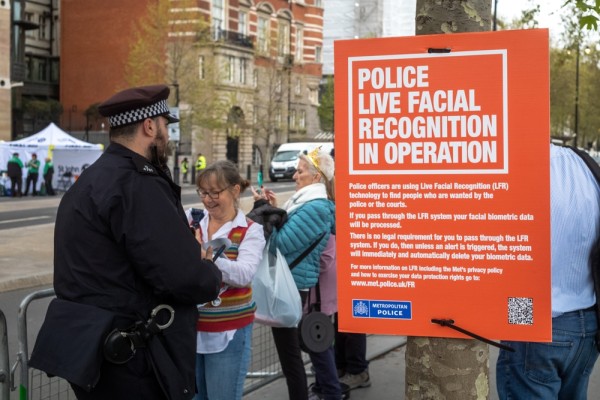
The Metropolitan Police Service (MPS) has published its 2025 annual report outlining its use of Live Facial Recognition (LFR) technology between September 2024 and September 2025. During this period, LFR deployments led to 962 arrests, bringing the total number of LFR arrests to over 1,400, with more than 1,000 people subsequently charged or cautioned.
Over one-quarter of the arrests were for individuals involved in violence against women and girls, including those suspected of rape, strangulation, and domestic abuse. Arrested individuals were those wanted by police or the courts, or those in breach of court-imposed conditions, such as sex offenders and stalkers, who may otherwise have remained at large.
The report also highlights the technology's effectiveness. The LFR system deployed by the MPS demonstrated an exceptionally low false alert rate of just 0.0003% from over three million faces scanned, and zero arrests due to false alerts. Public support for LFR use also remains strong, with 85% of Londoners backing the technology to keep them safe, and 74% saying that they trust the force.
Lindsey Chiswick, the lead for LFR, stated the tool is "powerful and game-changing," helping to remove dangerous offenders and deliver justice. The Met remains committed to transparency, emphasising that if a member of the public walks past an LFR camera and is not wanted, their biometric data is immediately and permanently deleted.
In a statement responding to the release of the report, Jasleen Chaggar, Legal & Policy Officer at Big Brother Watch said: "It is alarming that over 3 million people have been scanned with police facial recognition cameras in the past year in London alone. Live facial recognition is a mass surveillance tool that risks making London feel like an open prison, and the prospect of the Met expanding facial recognition even more across the city is disproportionate and chilling.
"Far from police using these cameras to find serious wanted criminals, the Met’s report shows that the majority of people flagged by facial recognition were not wanted for arrest.
"It’s disturbing that 80% of the innocent people wrongly flagged by facial recognition were black. We all want police to have the tools they need to cut crime but this is an Orwellian and authoritarian technology that treats millions of innocent people like suspects and risks serious injustice.
"No law in this country has ever been passed to govern live facial recognition and given the breathtaking risk to the public’s privacy, it is long overdue that the Government stops its use to account for its serious risks."
Training Announcement: The IAPP Certified Information Privacy Technologist (CIPT) is a privacy-focused professional IT certificate from the IAPP that addresses data protection requirements and controls within complex technological environments. It explores the data lifecycle, privacy risk models and frameworks, the principles of privacy by design, and the role of privacy-enhancing technologies within the organisation. Find out more.
What is this page?
You are reading a summary article on the Privacy Newsfeed, a free resource for DPOs and other professionals with privacy or data protection responsibilities helping them stay informed of industry news all in one place. The information here is a brief snippet relating to a single piece of original content or several articles about a common topic or thread. The main contributor is listed in the top left-hand corner, just beneath the article title.
The Privacy Newsfeed monitors over 300 global publications, of which more than 3,250 summary articles have been posted to the online archive dating back to the beginning of 2020. A weekly roundup is available by email every Friday.