

High Court rejects challenge against Met Police's use of live facial recognition
Published: 21/04/2026
| Last Updated: 30/04/2026
| BBC News
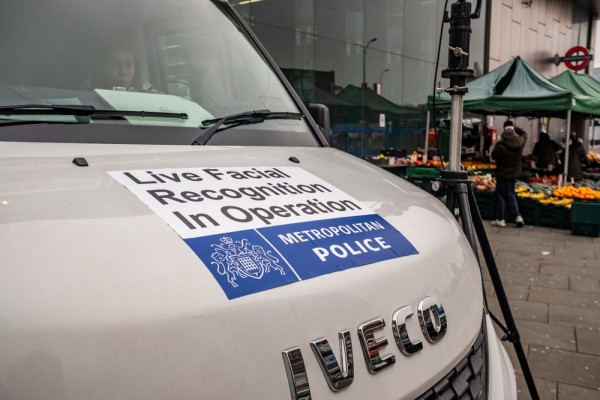
The High Court in London has issued a landmark judgment regarding a legal challenge against the Metropolitan Police Service (MPS) over its use of live facial recognition (LFR) technology.
The case was brought by youth worker Shaun Thompson and Silkie Carlo, the director of the campaign group Big Brother Watch. The claimants argued that the use of LFR was arbitrary, discriminatory, and violated Articles 8, 10, and 11 of the European Convention on Human Rights (ECHR). Specifically, they claimed that MPS's policy vested too much discretion in individual officers and failed the legal test for foreseeability.
Thompson's involvement stemmed from an incident where he was stopped and detained after a facial recognition match identified him as his brother, who was on a police watchlist. Despite these concerns, the High Court rejected the claims that MPS had breached privacy or human rights laws. The Court's detailed analysis concluded that MPS's policy provides an adequate indication of when the technology will be used, allowing citizens to reasonably foresee the consequences of travelling in areas where it is deployed.
Commissioner Sir Mark Rowley has described the ruling as an important victory for public safety, while Policing Minister Sarah Jones also welcomed the decision, confirming that facial recognition technology will be rolled out across the country with record investment.
In a statement responding to the decision, Silkie Carlo said: "This is a disappointing judgment but the fight against live facial recognition mass surveillance is far from over. There has never been a more important time to stand up for the public's rights against dystopian surveillance tech that turns us into walking ID cards and treats us like a nation of suspects.
"Innocent people deserve clear and strict protections from live facial recognition cameras, which should be reserved for the most serious cases rather than used to scan millions of people, and that is what the appeal will seek to achieve.
Shaun Thompson said, "No one should be treated like a criminal due to a computer error. I was compliant with the police but my bank cards and passport weren't enough to convince the police the facial recognition tech was wrong. It's like stop and search on steroids. It's clear the more widely this is used, the more innocent people like me risk being criminalised."
The claimants have indicated their intention to appeal the decision.
Update 300426: Legal analysis by 11KBW's Panopticon Blog and Pinsent Masons.
Training Announcement: Freevacy offers a range of independent data protection qualifications from IAPP and BCS. Our certified courses are available at foundation and practitioner levels and cover multiple legal jurisdictions, data protection operations management, and the implementation of complex privacy solutions in technical environments. Find out more.
What is this page?
You are reading a summary article on the Privacy Newsfeed, a free resource for DPOs and other professionals with privacy or data protection responsibilities helping them stay informed of industry news all in one place. The information here is a brief snippet relating to a single piece of original content or several articles about a common topic or thread. The main contributor is listed in the top left-hand corner, just beneath the article title.
The Privacy Newsfeed monitors over 300 global publications, of which more than 3,250 summary articles have been posted to the online archive dating back to the beginning of 2020. A weekly roundup is available by email every Friday.