

British Transport Police launch live facial recognition trial in London stations
Published: 11/02/2026
| BBC News
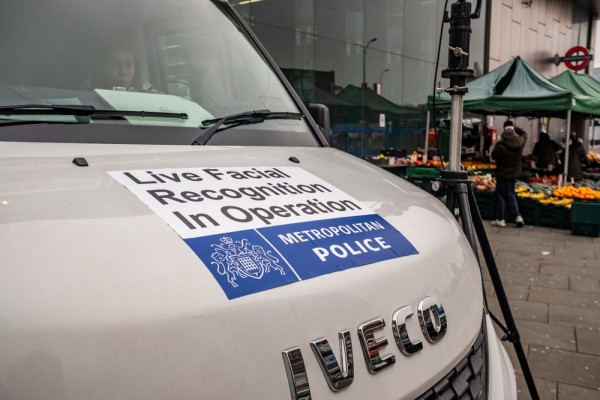
In a press release, British Transport Police (BTP) has launched a six-month trial of live facial recognition (LFR) technology, with the first operation commencing at London Bridge station. Part of a pilot announced in November, the initiative aims to identify individuals wanted for serious criminal offences and enhance public safety across the railway network.
Chief Superintendent Chris Casey said that a "significant amount of research and planning" preceded the trial, which is designed to evaluate the performance of LFR technology in a transport setting. BTP confirmed that images of individuals not on the authorised watchlist would be deleted immediately. The force also advised that passengers wishing to avoid the recognition zones would be provided with alternative routes. Deployment locations and dates are being published online in advance, and the public is encouraged to provide feedback via QR codes displayed at the stations.
In a statement responding to the news, Matthew Feeney, Advocacy Manager at Big Brother Watch (BBW), said: "We all want train passengers to travel safely, but subjecting law-abiding passengers to mass biometric surveillance is a disproportionate and disturbing response. Facial recognition technology remains unregulated in the UK, and police forces, including British Transport Police, are writing their own facial recognition rules, including those governing how they use the technology and who they place on watchlists.
It is especially concerning that British Transport Police are moving ahead with facial recognition deployments before the Home Office has finished its consultation on a legal framework for police use of facial recognition technology.
The use of this technology is especially offensive in a democracy where neither the public nor Parliament has ever voted on its use. Sadly, the UK stands out among democracies when it comes to the widespread use of live facial recognition. The Government must take immediate steps to rein in police use of this technology."
BBW has also launched a petition addressed to Home Secretary Shabana Mahmood, calling for an end to facial recognition. As of Monday morning, the petition has secured 5,323 signatures.
Training Announcement: The IAPP Certified Information Privacy Technologist (CIPT) is a privacy-focused professional IT certificate from the IAPP that addresses data protection requirements and controls within complex technological environments. It explores the data lifecycle, privacy risk models and frameworks, the principles of Privacy by Design, and the role of privacy-enhancing technologies within the organisation. Find out more.
What is this page?
You are reading a summary article on the Privacy Newsfeed, a free resource for DPOs and other professionals with privacy or data protection responsibilities helping them stay informed of industry news all in one place. The information here is a brief snippet relating to a single piece of original content or several articles about a common topic or thread. The main contributor is listed in the top left-hand corner, just beneath the article title.
The Privacy Newsfeed monitors over 300 global publications, of which more than 3,250 summary articles have been posted to the online archive dating back to the beginning of 2020. A weekly roundup is available by email every Friday.